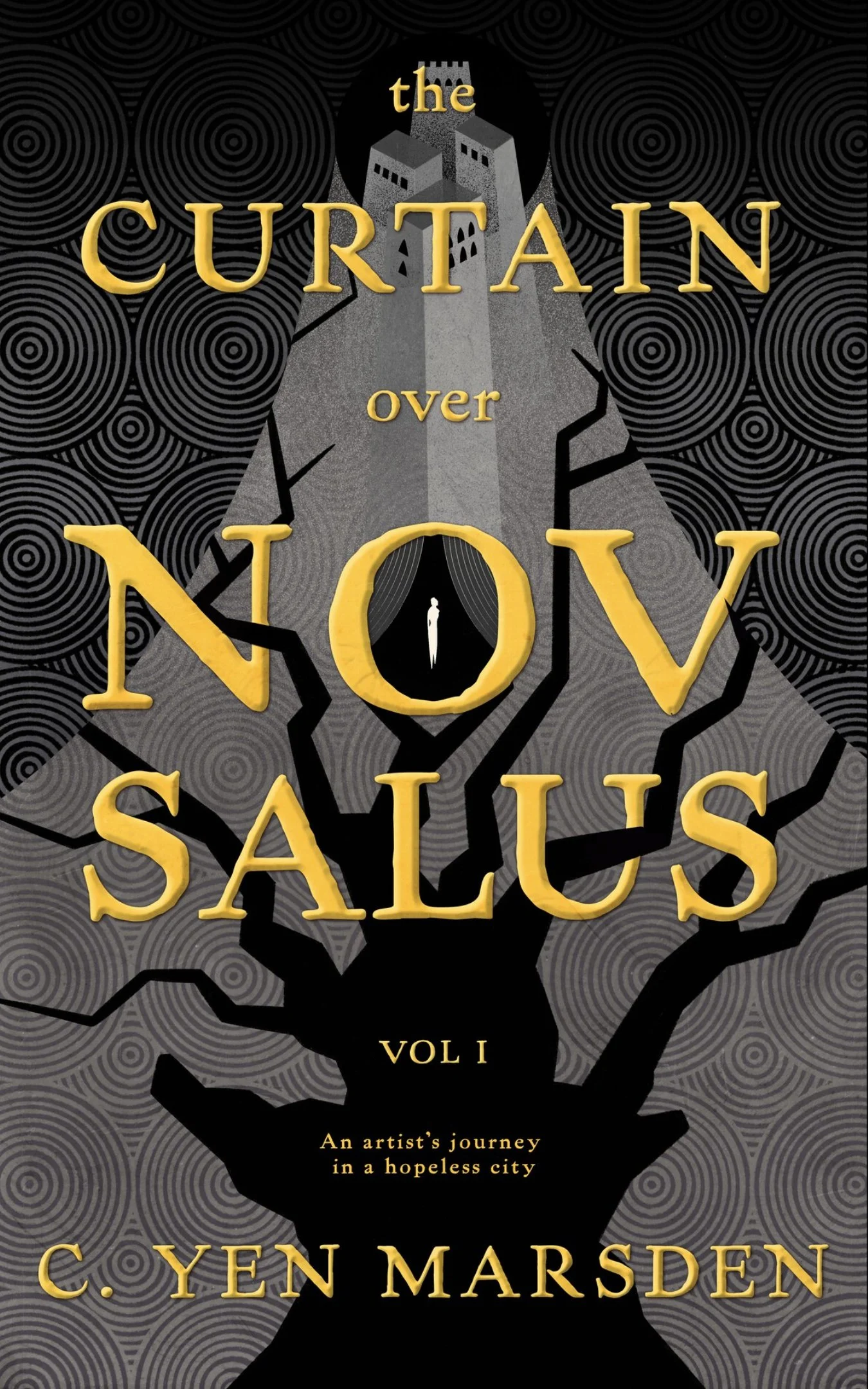
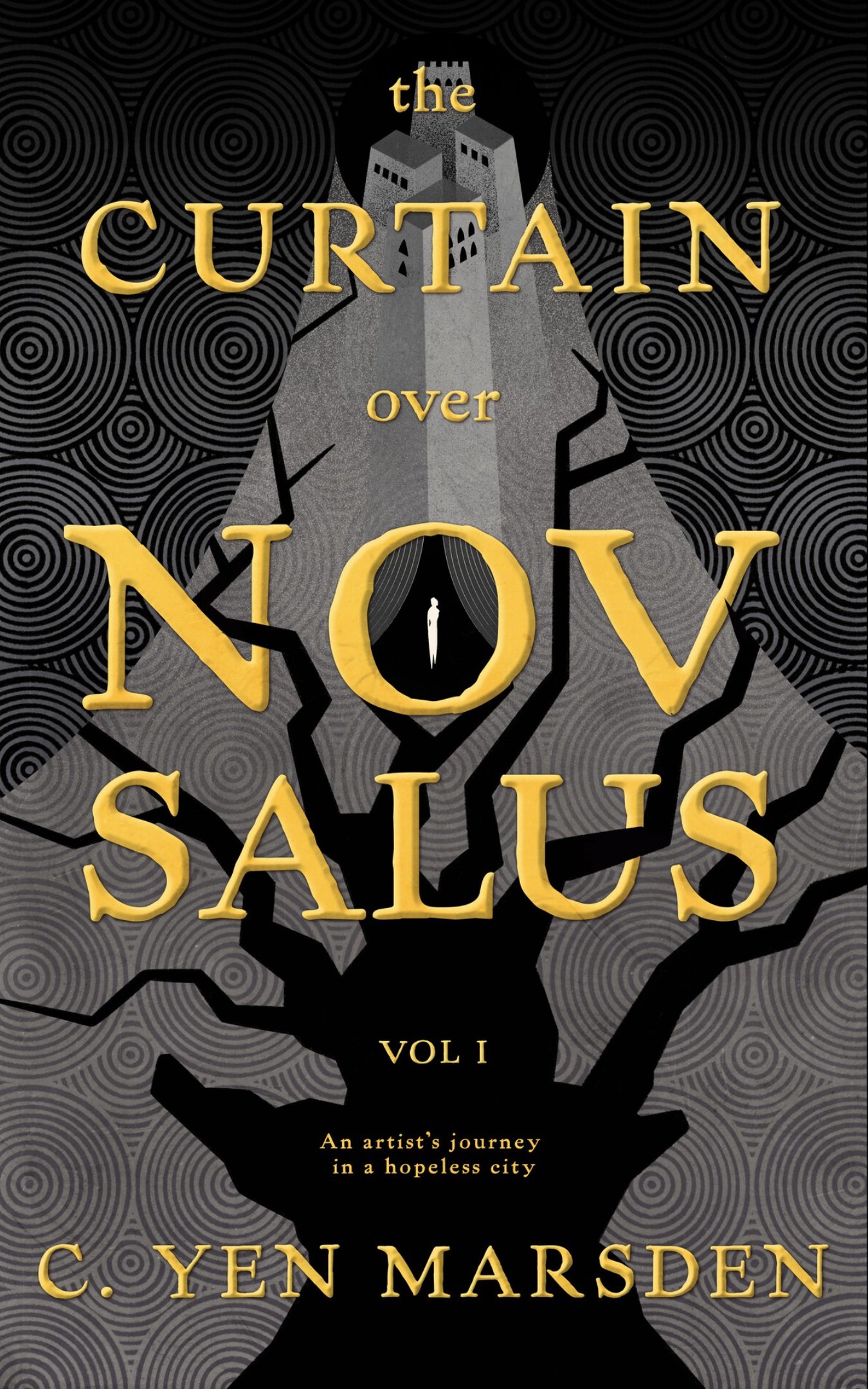
Story Sample 11: The Curtain Over Nov Salus
-
You love Attack On Titan or The Poppy War
You need a magic system with a heavy cost
You want that ‘lost soldier finding their way’ vibe
Fantasy | Dark Magic System | Military | Phycological
Summary:
An artist's journey in a hopeless city.
The city of Nov Salus is eating itself alive.
Trapped behind its walls, people die stacked in the streets while the crown demands the army push west into lands where beasts and Terrors roam free. Only the mutated soldiers, those who trade limbs and senses for power, can hold the line.
Kitalain Nostradame was proud to join them once. Losing her arm for the ability to fight the beasts meant prestige, a future for her immigrant parents, and proof she could be more than her birth. But three years later, her mutation has healed, her deployment nears, and her conviction is crumbling.
When the Half-King orders all recruits to march toward the Great Beast, Kitalain faces the truth: she's sacrificed everything for a war she no longer believes in. But her parents demand they are repaid for their sacrifice; her city demands she complete her duty.
And yet, buried beneath the fear and fire, she remembers what she once loved-creation, performance, the quiet rebellion of art.
As Nov Salus burns, Kitalain must choose how to fight: with the monstrous power in her body, or the creative spark in her soul.
The curtain is falling over Nov Salus.
Perhaps she can save its final act.
Join our community to get a fresh opening chapter delivered to your inbox every Monday. 1 email a week.
Chapter 1
Prologue + Chapter 1
The Reader's Sample | The Curtain Over Nov Salus, Prologue + Chapter 1
THE MIST SANK HEAVY on the day the Great Terror came. Opening Detail: This detail feels like filler, immediately getting overshadowed and forgotten. Better to pick a detail that better sets the scene. "Happin Nostradame felt a pain in her chest…" "The nobility lounged with goblets of juice…" Opening Line: Aside from the filler detail—good rhythm, good intrigue. The anticipation set by the "Great Terror" makes this an effective opening sentence. The expansive gerryvine pastures along the western coast of Vet Civas' city limits stretched endlessly, the purple vines winding around their plaster trellises, curving with the horizon, and disappearing where land met sea and mist swallowed all. Those fortunate enough to overlook such vines, the ones seated on balconies of white masonry, did so with juice dribbling down their chins while quaint notes from silver harps drifted in from their verandas.
The nobility of Vet Civas had worked tirelessly and faithfully for this luxury, enduring titanic waves and black pirate ships from the eastern seas, erecting towering border walls cut from the white granite of the high cliffs Exposition Through Setting: Grounding setting description through exposition keeps the chapter moving forward while still painting the picture of the scene. Great tool for a prologue that can't afford to stop and describe everything. , and training their soldiers to fend off the horrors to the west: the amalgamated beasts and all those other skittering creatures they couldn't understand. They learned to manage the cognitive attacks of the intangible, invisible Terrors that soared the skies. They were far from vulnerable. They were wealthy. Important. Safe. Sentence Rhythm: Good rhythm, slowly reducing the sentence size to drive the point in.
But how fast that changed when their veil of security was torn—when the thin sheet that separated the comforting light from the horrifying unknown fell, and they were left staring into the darkness.
It began with a woman and her husband.
The Nostradame family lounged upon their opulent deck, surrounded by silken fans with servants to flap them, ripe berries with attendants to serve them, and not a care left in the world. Happin Nostradame felt it first. A pain in her chest. She dropped her goblet, the gold vessel clanging against the polished stone. Tink, tink, tink, until it rolled through the gapped pillars and down, down, down. Purple Prose: Using this sentence as one example, this opening borders on purple prose that distracts from the actual scene. Crack, went a trellis; the gerryvine shook, rippling down to be swallowed in the fog.
"He's kicking?" Joran Nostradame asked, kneeling and placing a hand on his wife's pregnant stomach.
Happin opened her mouth to speak, but all that came out was a wheeze. Her eyes squeezed shut. Her teeth clacked closed.
"Breathe in. He'll be coming soon—"
But Joran was caught before he could finish, frozen in a paralyzing joint-lock, a state he and all other adults in Vet Civas had long learned to acknowledge and conquer with their coming of age. It was the stasis of fear. The immovable blanket of the Terrors; heat and cold, sweat and nightmares. But one much more absolute than anything he'd felt before.
Anchor… anchor… Joran thought, in a desperate attempt to calm his mind, trying to recollect the old adage repeated by adolescents. Anchor your…
But neither Joran's body nor mind was his own. His limbs froze in their bent positions like branches from an old trunk. When the veil of Vet Civas fell, Joran stared into the darkness and felt no larger than his child still stuck in the womb. His experiences, his knowledge, his self, vanished.
The same empty husk carved into the city's souls.
So when the Great Terror subsided, and all the trappings of society, class, wealth, and family came back, it was those very things that didn't matter anymore. Some lost their minds forever. Some broke from their stupor and ran to the sea to be dashed against the high cliffs. The natural order broke as those at the top of the chain lost their confidence to rule and those at the bottom were emboldened enough to take.
The city burned.
A frenzied rush began as the locks to the royal stables were broken and the giant destriers stampeded through the streets of white stone. Clarity Gap: A little vague on why this Terror has everyone rioting. The Terror is described as "one much more absolute than anything he'd felt before" and describes him losing his sense of self, knowledge, experiences, etc. How does it affect Happin and Joran mentally after they're awake? Was everyone driven a little insane, or just some? Why did it have the specific effect of making nobles lose confidence and emboldening those at the bottom? In a stroke of sheer luck, Joran Nostradame watched from his veranda as a mare, silhouetted by the smoke and mist on the horizon, crashed through his gerryvine trellises and came to rest at the stoop of their manse. He had always been a man of the Singulist faith, always been kind to his field hands, but as the same servants encroached on his property, he defended this divine gift and his family's future with his life. He never spoke of what happened that day, but before night fell, he, his wife, and their unborn children fled the city with everything that could fit on a small rickshaw, pulled by the very horse.
The few fortunate fled. The many who couldn't stayed.
The handful who already owned ships went to the water in search of the City Beyond the Shores. The only other choice was to go deeper toward the inner country, to a city most citizens from Vet Civas thought unholy and blasphemous. They migrated, reluctantly, toward this new domain that had broken away many generations ago, winning a civil war to claim itself as a sovereign nation.
A city rumored to spit on the beliefs of Singulism, but in doing so, fight back against the Terrors and beasts. Logic Gap: Unclear on how spitting on the beliefs of Singulism means fighting back against the Terrors and beasts.
To Nov Salus, where the Nostradames' status crumbled to the very same as those who had tended their gerryvines, plucked the silver strings, massaged their feet. Never before had Nov Salus opened its gates to the very people they'd seceded from. Relations between the two cities were nothing if not hostile. But the Sixth Ruler of Nov Salus, thought to be generous to a fault, accepted these refugees with open arms and grand expectations.
No one could explain the Great Terror that had attacked the East. But Nov Salus had stood against its bestial sister and survived from its onslaught to the west. As the walls of the city filled with refugees, all felt the pressure, the confinement. All feared the Terror would come again.
The veil had been ripped away, never to be fully replaced. The window was open, the night encompassing. The darkness was near.
Anchor your hope, went the saying.
But many who traveled west lost the ability to moor themselves. With no tether to sensibility and faith, their hope ran free—far from their homes of comfort by the sea.
EVERY MORNING, THE RECRUITS missing an arm were forced to run. Opening Line: Great first sentence. Introduces a question and sets the scene in one short sentence, with an "elephant in the phone booth" (the missing arm) that intrigues the reader.
The loose dust and dirt of this dismal pit, kicked up by shuffling and stomping boots, was the worst part. Narrative Voice: Clear voice from the narrator. Cantor's recruitment center was the farthest from the royal estate in both mind and manner, tucked against Nov Salus' southern wall, and nowhere else were the mutated recruits covered in wasteland dust from running on barren dirt floors. Kitalain Nostradame tried to keep her mouth closed, but paltry breaths through her nose weren't nearly enough. Her lungs screamed for more. A layer of grime covered her tongue. A film developed over her exposed skin. Her black hair clung to her face, plastered with sweat. There was no sense wiping it off. Redundant Sentences: Too many sentences that say relatively the same thing—Kitalain is tired. Three or four sentences would do the same in fewer words.
Push.
The eighth lap was the hardest. Kitalain's initial lead had shrunk in the third. The bracing morning chill had waned by the fifth. But the eighth was when she drastically slowed—when exhaustion from lack of a good night's rest settled in, and her legs burned with fatigue even after three years of constant training. The eighth was when other recruits began to pass her.
Kitalain saw them in her periphery, two male second-years pumping their single arms with trained efficiency. Kitalain choked on the dirt, gagged on her own spit. Flinching as dust stung her eyes, she saw them overtake her, pulling ahead as they rounded for the ninth and final lap.
Push. Internal Dialogue: Good use of internal dialogue to give insight on her mental state—how she has the soldier mentality of pushing through pain.
Kitalain squeezed her eyes shut, leaned forward, and gave the path everything she had, as if they didn't have more grueling physical conditioning directly after this, as if she didn't have a frustrating day of strategy training ahead of her. She blew past the commissary, past the stables, past the holding cells and somatic infirmary and lucid ward. And, right before they reached the barracks, Kitalain passed the two second-years.
Every morning, the recruits missing an arm were forced to run, and every morning, Kitalain finished first. Bookend Repetition: Good repetition to tie back to the first sentence. Poetic.
"I'd say… congratulations," one of the second-years panted as they caught their breath in front of the row of six identical barracks. She didn't know his name. She hadn't cared to learn. "If this was a race, of course."
Everything's a race. Kitalain held the words back. It was better not to engage with second-years. They were confident and wide-eyed, past the worst of the mutation's pain, but not yet close enough to the end of recruitment to think about what actually came next. Their wounds still bled, bandages tucked underneath the cropped gray shirt's sleeves where they'd lost a limb, but they were no longer crippled by anguish. She turned away from them as the rest of her fellow third-years trailed in along the looping track of padded dirt they called the Recruit's Path.
Most third-years had established routines after the morning run: walking in circles to cool down, stretching their aching legs, or raising their hand above their head to let air into their lungs. But Tully Hircona, the shortest of their year, had a unique routine—flopping down, limp as a corpse.
"If Hulton makes us run another damned lap because you were so far ahead…" Tully gasped, collapsing against the thin walls of their barrack. The building's rusting frame was so frail that even the weight of his skinny body shook it violently. Drenched in sweat, his gray shirt had become a shade darker, and wiping his brow with his left hand didn't do much except pave the way for new budding beads to form on his dark skin. "…then I might just vomit. All over the floor. All over you. Wouldn't be my fault, either. You'd have to clean it up." Sentence Rhythm: Uses sentence structure to simulate breathing patterns, which adds an extra layer of immersion.
Kitalain was going to retort, but stopped when she saw the state of Tully's right shoulder. While the scars marring her own right shoulder kissed the cool morning air, his were still bound and wrapped like those of the recruits much younger. The run had spurred the bleeding, as it often did, and the sweat made his bandages come loose. She'd have to help him change before their first meal—if he'd let her.
Another day ahead. Kitalain shivered and looked south, trying to enjoy the morning mists while they lasted.
Sometimes, Kitalain felt sorry for those who'd never lived in Cantor, for they'd never experience how the mist rose from the southern depths and crawled over the wall. There was a short period after the run, when the morning mist and dust plumes blended with the sun's rising light to bathe Cantor's dingy center in an orange haze that was… almost beautiful. Almost enough to make her forget the narrow cots, the mushy pottage, and the plights soon to come with the new day.
"I'll slow down next time," Kitalain finally replied, without remorse.
"No, you won't," Tully said, eyes closed. "We're going to wake up tomorrow and you're already going to be a lap ahead. I have nightmares about that, you know. You give me the Terrors, Kit. Every time I close my eyes, you're leagues ahead of me, while Hulton's breathing down my neck with a stick ready to shove up my ass."
"Run faster, then."
"Run faster then," he mimicked. "I would if I had your freakishly long legs. Imagine if the mutation took one of your legs, huh? Then what? You'd be over there with Beladon and the legless doing push-ups and handstands and whatever peculiar acrobatics they do. Doubt you'd be the best at everything then."
"Of course you would, if you had both of those freakishly long arms!" Tully opened his eyes as the shuffling footsteps of another recruit neared. "Gitty—tell Kit she's freakishly long."
Kitalain kicked a plume of loose dirt onto her sprawled friend as Gitty Loph took a seat next to them. Unlike Kitalain and Tully, who had the slightly worse misfortune of losing their dominant right arm, Gitty had lost his left. He was shorter than Kitalain by a hair, taller than Tully by a head, and arguably the smartest of their year. Kitalain got a sick satisfaction from seeing him pant so heavily, for there were other parts of being a recruit where Gitty's skill soared high above her own.
"Cold this morning," Gitty said, raising his right hand above his head and taking deep breaths.
"Like it isn't cold every damned morning," Tully groaned. "You shouldn't be the one complaining, Oh Fortunate One. Kit and I still have to prance through these silly hoops. But you won't be cold in the forges."
Kitalain startled, eyes darting to Gitty's left shoulder, where his uniform was cinched to hide his mutation and the prize that came from it. "That's not today, is it? Can they really have your sword ready at such short notice?"
Gitty had only passed the final stage of their training the day before, the first in their barrack to do so. If they'd been studying to be scholars, it would've been akin to graduating months before the other students. It was what had led Kitalain to nearly breaking her streak of finishing first in the morning run—last night's sleep weak and sporadic as she lay awake in a jealous fit. Pacing Interruptions: Constant interruptions in the dialogue slow pacing and increase disinterest. Most are needed to understand the characters, but it can be cut down so the dialogue progresses faster.
"Of course they do!" Tully exclaimed. "They've had it ready since the day he was born. The Prodigy of the Sixth Barrack! Everyone give a round of applause!"
Tully smacked his left hand against his temple in lieu of a proper clap.
"The first to engrave his ceremonial sword, huzzah! Hurrah!" he continued to yell.
Gitty didn't seem the least bit excited, but then again, nothing ever excited him save for bathing first on wash days. "All of our ceremonial swords were made as soon as we started our third year," he muttered. "Hulton said so. They just assume everyone will heal up fine and pass strategy training on time."
Bold assumption, Kitalain thought, looking at the beads of red coming up from underneath Tully's loose bandages Character Through Detail: A subtle detail to show she cares for Tully without outright saying it. . Of the forty-three third-year recruits in the sixth barrack, Tully was the only one whose mutation hadn't yet healed. He had the former problem to deal with, Kitalain the latter.
"You should have it engraved: Gitty Ninny the Nitwit," Tully said, oblivious to the blood. "So when I get my sword, there's no chance of mistaking the two."
Gitty frowned. "Yeah, well, yours should say… Tully the…" He glanced to Kitalain for help. "Tully the…"
"Tully Bully the Minnow," Kitalain offered. "For how much you smell like rotting fish."
"Some take the smell of fish to be more intoxicating than perfume," Tully replied. "A noble profession, fishing, so I've heard."
"So we've all heard," Kitalain mumbled.
"Maybe we should match our engraved names," Tully said. "Something bold like the Three Flames. Or perhaps the Three Knights. The Three Gods. The Three… Cantor Cronies!"
His optimistic words were—thankfully—drowned out by one of their armless peers jogging up and calling out to the group of recovering runners.
"Hulton sent a message," she said, glaring at Kitalain. "He saw how far we were behind Nostradame. We're to run three more laps."
"Everyone?" asked the peevish second-year.
"No," she spat. "Just the sixth barrack."
There came a collective groan, but Kitalain's only remorse was that she couldn't make those second-years run again as well. Character Voice: Kitalain has had a clear, distinct, and interesting voice so far. This is a great sentence to add to that. Showing the reader who your protagonist is is undeniably the most important part of the first chapter. It's well done here, through both internal thoughts and actions. She pulled Tully up by his left arm, inspecting his other shoulder.
"What?" he said defensively, turning away from her, conscious of the others watching.
"I'm trying to see if your bandages will hold."
"They will."
But as they started jogging, she noticed Tully quickly fall behind. He wasn't pumping his arm, instead holding his bandages in place. Kitalain started to slow, pulling back, but her eyes met Tully's, and in them was a fire she'd seen only a few times before.
"Don't you dare," he breathed.
So Kitalain took off, running as fast as she could. Depth Through Action: Interesting level of depth added; Kitalain, who's been mostly cold and competitive, shows compassion for Tully.
It's a really well written opening, with one of the most unique writing styles I've read in a while. I'm usually not a fan of strong world building in the opening chapter because it either slows the pacing to a crawl until nothing actually happens or it replaces character building. This opening, however, executes this cleanly.
One of the most prominent weaknesses is in the dialogue exchange with Tully, Gitty, and Kitalain. It's a scene where everything stops while they talk. Nothing in the dialogue progresses the scene forward or suggests a point that it'll end, focusing instead on deepening our understanding of the characters (a good choice, but still lacks progress). A simple way to add a sense of progression is to establish an endpoint. Telling the reader that a scene will end when this thing happens lets them sit back and enjoy the scene a little easier. A way I would've done this is to add a timer until the next exercise begins, and even have them get closer to beginning this new exercise while they talk. That way the reader gets the same understanding of the character, but without the scene coming to a halt. A great chapter. I would suggest writers study the writing style (noting that the prose can be a little too purple at times), and the narrative voice of Kitalain.
-
Starting the prologue with "The mist sank heavy..." is atmospheric, but it gets overshadowed by the mention of the "Great Terror." Conversely, Chapter 1 opens with a masterclass: "Every morning, the recruits missing an arm were forced to run." That line immediately introduces a question, a unique world mechanic, and visceral imagery.
The Fix: When opening a scene, skip generic environmental descriptions. Choose a specific, high-contrast detail that creates curiosity. (e.g., the nobility lounging with juice dribbling down their chins).
-
The prologue builds a sense of absolute security by shrinking the prose down to a rhythmic stop: "They were far from vulnerable. They were wealthy. Important. Safe." Later, in Chapter 1, Tully’s dialogue uses fragmented, choppy clauses to mimic his actual gasping breath patterns after a grueling run.
The Takeaway: Match your syntax to the physical reality of the scene. If a character is panicking or breathless, slice your commas and run-on sentences. Force the reader to read at the same fractured pace the character is breathing.
-
Chapter 1 nails this with: "Every morning, the recruits missing an arm were forced to run." It doesn't waste time explaining the magic, the war, or the political setup. It throws a jarring, specific image into the room, hooks the reader with curiosity, and then uses a satisfying circular structure to bookend the scene when Kitalain finishes first.
The Takeaway: Start your chapters with a high-contrast fact or a striking visual irregularity that cannot be ignored. Give the reader a specific puzzle piece immediately, then let the rest of the narrative naturally unpack how it got there.
If you enjoyed this week’s sample, we would greatly appreciate it if you could take 15 seconds to share this with someone you know that might like it too. It helps not only us, but the authors we spotlight.
If you want to support this week’s indie author, you can find the full book by clicking the button below the chapter.
We appreciate you reading to the end.