Story Sample 5: Below the Mines
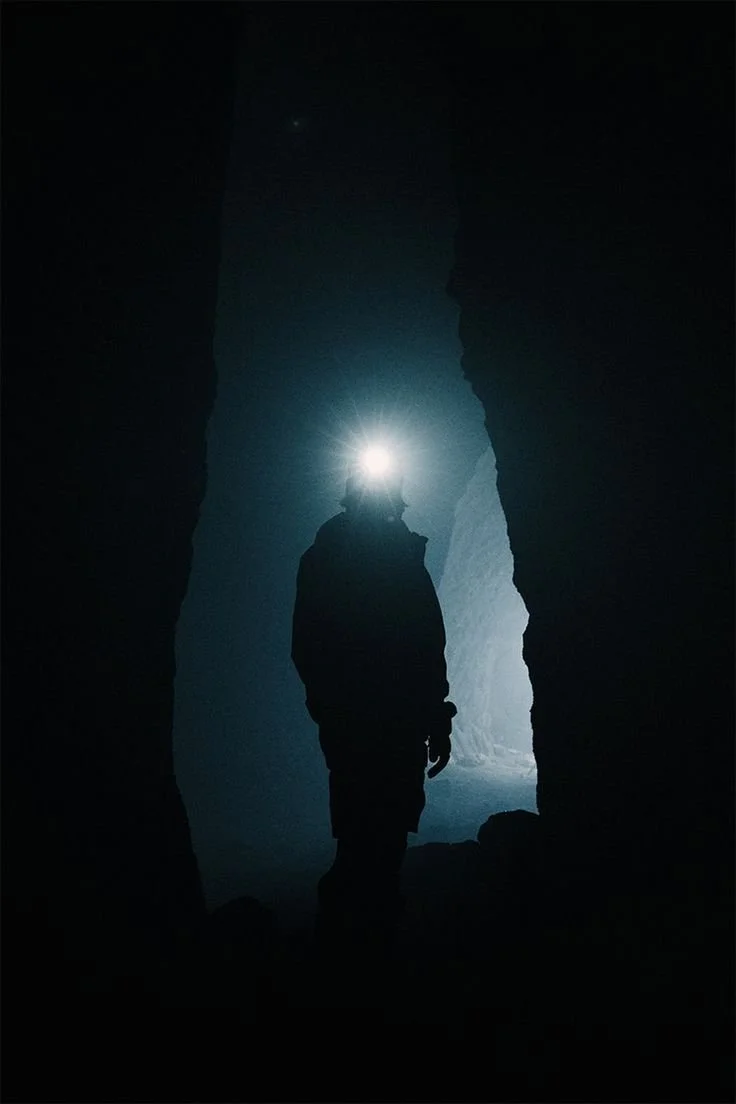
-
You love blue-collar psychological horror that trades shiny sci-fi for grit, sweat, and underground dread.
You appreciate a protagonist who is just a normal dad doing a dangerous job for his family, grounded by a heavy dose of reluctant realism.
You crave the tension of industrial isolation—where the environment itself feels alive, hostile, and actively listening.
Industrial Horror | Psychological Suspense | Realistic Dialogue
Ben is a family man, and currently the most reluctant passenger boarding Flight KB227 to the Kalgara mine. Instead of the quiet week off promised for his daughter’s sixth birthday, an emergency "all hands on deck" call forces him back into a bleak airport terminal and into conversation with a bizarre old-timer who knows far too much about The Deep. As a blast technician, Ben is prepared for volatile explosives and toxic ammonia gas, not missing coworkers or rock faces that seem to listen, which begs the question; what exactly is waiting for him down there?
Join our community to get a fresh opening chapter delivered to your inbox every Monday. 1 email a week.
Chapter 1
Chapter 1
The Reader's Sample | Below the mines, Chapter 1
I'm a miner.
I dig holes for a living.
Well… no. I blow shit up so we can keep going deeper. Opening Subversion: great opening subversion. three short declaratives, each correcting the last, hook the reader in under 20 words and stamp the narrator's dry voice before we know his name.
Drill, charge, blast, bog. Repeat. There's a rhythm to it. It makes sense. Motif Plant: plants the "rhythm" motif that pays off later when the flight call breaks it.
I loved the job. Still do, in a way. Even if the air always tasted like ammonia. But every time I heard my little girl's voice through the phone, I'd wonder how much deeper I could go before something down there took more than time.
A man does what he's good at — and I'm good at this. Holes pay the house deposit. They pay for the dentist, Daphne's school, her shoes. All of it.
Doesn't mean the place didn't take its cut. If only I'd paid more attention. Back when the walls started to feel closer. Like something behind them had woken up and was listening. Structural Echo: this "listening" line quietly seeds the old man's "always listening" dialogue later. good structural echo planted early enough that readers won't clock it until the second hit.
My mind's blank, like someone's flicked the switch off. I stare out at the tarmac, thumb tapping the lid of my coffee. I didn't even want it, it's a force of habit. At least it's freezing outside — wet and windy. The cold seeps through the glass, but the cup warms my hands. Last night's storm still hangs around, grounding half the flights. Mine's already half an hour late. But there's something different about the place today, the windows are darker. Nothing extreme, just enough to notice. Dread Through Understatement: "nothing extreme, just enough to notice" is doing the work of an omen without a single supernatural word. trust the reader move, worth stealing for slow burn horror.
I push the thought aside and text Jo. My hand fumbles as I type: Love you, babe. Tell Daphne we'll go to the zoo when I'm back. Proper day out. The three of us. After I hit send I stare at the phone, at my girls.
My leave was booked and signed off two months ago, though a few of the crew got sick. The manager called me yesterday, "all hands on deck." Didn't give me a fucking choice.
So I'm here waiting for a plane, missing her birthday. She's six tomorrow. They grow up fast, faster when you're just a photo on the fridge.
The mine manager still got his week off, taking his kid to the Gold Coast. Dreamworld or some shit. The little cunt's birthday is the same day as Daphne's. 'Course he gets to go. Blokes like that always do. Sharp Voice: voice stays sharp and specific under the venom, "little cunt's birthday" lands as class resentment, not just cursing for shock.
"So what d'you do onsite, mate?"
I look up at an old fella with a tired face, his lips buried in a long white beard. A scar dents his temple, half lost in the wrinkles. He rasps the question again, pointing just above my breast pocket.
"Your shirt, mate. Barrowcorp. You're working at Kalgara? What d'you do onsite?"
"Charge Up," I say, flat. No smile and no small talk. He doesn't flinch and I don't explain.
"Ah, Powder Monkey. Good money in that, mate," he says grinning. His gruff voice drags my eyes to his. "I used to work there. Down in The Deep. Long time back now. That place's been open for yonks," he laughs. Dialect Worldbuilding: worldbuilding entirely through dialect. "Powder Monkey," "The Deep," "yonks" do the job a paragraph of explaining would've done, and it costs nothing in pace. highly recommend testing this trick, let jargon carry the exposition instead of narration.
Powder Monkey. Haven't heard someone say that in a long time. This guy must be ancient, probably worked down there before half our gear even existed.
The rain drums harder on the tin roof above. I nod, more focused on the noise than what he's saying. Outside, a baggage cart clatters through the carpark. A distorted voice crackles over the PA: "Final boarding call for Flight 247 to Jindalee."
I drag my attention back to him. He's still speaking, I don't catch all of it — just old decline call points, stope names, shit you only know if you've eaten dust down there. The Deep, he says again. That's what we call it. Just a hole in the desert eating its way through half the state.
Yeah. He's been there.
"Oh yeah," I say. "What were you doing up that way?"
"Bogger operator, back in the day. Swear half my time was complaining about those bloody fans. No aircon in the loader back then, sweat my ring-hole off every shift. Them vents still playin' up?" Dialect Consistency: dialect consistency is doing a lot of heavy lifting. this old fella sounds like a specific person, not a generic "wise old miner" archetype.
"They work fine as far as I can tell," I say, glancing toward the front desk. A woman is arguing with the clerk — something about her hand luggage being heavier than the seven kilos we're allowed. Dead Texture: this beat doesn't build dread or character, it's texture for texture's sake right as the old man's lines are starting to do real work.
He just nods, mumbling under his breath. "That's good, that's good. They were always a bit weird back in the day. Nah, it's about time. Ah yeah so that old place is still breathing then," he says, laughing.
It's not a warm laugh. Something about the way he sits — it's too still, too calm. It puts me on edge, like he's watching me too closely. Gives me the feeling that something's about to happen, even if I can't prove it. Re-Told Unease: this is telling us the unease the last two lines already showed us. "not a warm laugh" and "too still, too calm" already land the wrongness, then the text spells it out again with "puts me on edge" and "something's about to happen." cutting straight from the laugh line into the next line of dialogue would let the reader feel the dread instead of being handed it.
"I always thought that place felt… real quiet, when I went down the hole. Like someone was always watching. Always listening," he says, as he taps the bench once, twice, three times — only it sounds wrong: way too deep, like the sound's coming up through the bench, not bouncing off it. Standout Beat: this is the standout beat of the chapter. specific, physical wrongness ("way too deep," "coming up through the bench") instead of a narrator telling us something's off. this is what showing actually looks like.
"Because they are, I guess," he mumbles, staring at his boots as a grin stretches across his tired face. "Cameras in every cribhut. Every muster point and every refuge chamber. Fuck, it wouldn't surprise me if they'd wired the rock itself…" He cackles. I nod and look outside, at the planes rolling on the runway under a sky the colour of wet cement. Others groan overhead, loud, complaining like they don't want to take off into the grey either. Pathetic Fallacy: nice bit of pathetic fallacy, the planes not wanting to fly into the grey mirrors the narrator not wanting to go back down.
I don't want to fucking go back today. I just want to be in bed with my arm round Jo's waist, listening to the rain on the roof tiles. Instead I'm here in this dingy terminal, getting ready for another week of bullshit.
"Used to be a crew of twenty-seven," the old fella says, interrupting my thoughts. "Still a small crew. Bit of this, bit of that. Some truckies. Drills. Boggers. Can't imagine it's too different now," he says.
"Uh huh," I mumble as a plane taxis toward the terminal, "yeah pretty much the same now," I add, keeping my eyes on the NJE prop-plane rolling past. Unexplained Jargon: unexplained "NJE" briefly stalls a reader who isn't already fluent in regional airline codes. detail not needed.
"Well… twenty-six. Never found the last one." Sentence-Level Jump Scare: the whole scene has been building to this line and it lands exactly right, one short beat after a stretch of dialect chat. the drop from "twenty-seven" to the correction is doing the same job as a broken sentence, the sentence structure itself is the jump scare.
I turn my head but he doesn't blink, doesn't explain. Simply looks out the window, like he didn't just say something that twisted in my gut. Like it's normal. He lifts his cup, takes another sip, and stares at the rain-soaked tarmac like nothing happened. Doubled Beat: "like it's normal" and "like nothing happened" are the same beat said twice back to back, one of them can go and the line loses nothing.
I look back down to my coffee. The cardboard that somehow doesn't get soggy and fall apart, a white lid stained brown by each sip. It smells cheap and stale, tastes like it too — burnt and bitter, but warm. Inside the terminal it's no better. I've waited here and walked through this building for years. Same ugly carpet with that outdated mix of teal and rust, and whatever those patterns are meant to be. The hard plastic chairs with thin, scratchy fabric. Biggest Pacing Snag: this is the chapter's biggest pacing snag. we just got hit with "never found the last one" and instead of riding that gut punch, the text stops for six sentences of carpet and cardboard cup description. the tension the previous line built just sits there cooling off while we catalogue the decor. cutting this down to a line or two, or moving it to an earlier calmer beat, would keep the reveal's momentum instead of burying it.
Suddenly the speaker crackles overhead. "Attention travellers. Flight KB227 is now open to all passengers travelling to Kalgara. Please make your way to Gate 2 with your boarding pass ready." The voice is distorted, drawling across the terminal like it's underwater. Dreamlike Wrongness: "like it's underwater" keeps the dreamlike wrongness going without a wasted word.
Flight's in, back to the rhythm. Bookend Callback: nice callback to "there's a rhythm to it, it makes sense" from the opening. same word, completely different weight now that we've met the old man. good bookending technique, worth trying in your own openings when you want an early throwaway line to curdle later.
I look over at him again. Still nothing. No wink or smirk. Just slow sips of coffee, eyes glued to the rain like he's seeing something I'm not.
I stand and pick up my bag, give the old bloke a polite nod. He doesn't return it, doesn't blink, just raises his cup again like he never saw me. Still staring, still sipping, gaze fixed past the glass. Deliberate Repetition: the repetition of "still staring, still sipping" reads deliberately robotic here, works in the story's favor, makes him feel like he's stuck on a loop instead of just being rude.
I take a step back and hesitate.
His boots. Hard Tension Snap: single sentence paragraph as a hard tension snap, mirrors the "twenty six" beat structurally. earns its brevity because everything around it has been full sentences.
Caked in black dirt, the kind you only get deep underground. I hadn't seen that earlier. Hadn't noticed the way his hands don't shake, despite the cold. Object Payoff: this is the payoff to object based characterization done right, the boots do more work here than another paragraph of dialogue could. the "hadn't noticed" framing also retroactively makes the narrator, and by extension the reader, feel complicit in missing it.
I turn away, heart ticking faster now, and head toward Gate 2. Word Choice: "heart ticking" instead of the standard "heart racing/pounding" is a small but smart choice, ticking implies a countdown, which fits the scene better than the cliché option. I tell myself it's just the rain, the early-morning shakes, the cold. I keep my eyes forward, and for the first time in a long while, it's not just that I don't want to go to work — I don't want to go down.
Not down there. Clean Close: clean, short, ends on the exact phrase that's been mutating in meaning the whole scene. strong hook into the next chapter.
-
The weather and the airport terminal aren't just background decoration; they actively reflect the narrator's internal dread and the oppressive nature of the mine. The sky is "the colour of wet cement," the windows are "darker," and the PA voice sounds "like it’s underwater"—trapping the narrator even before he gets on the plane.
The Lesson: Never let a setting just sit there. Make the environment do double-duty by forcing it to mimic the emotional state of the character or the thematic weight of the story. If a character feels trapped, make the room feel small.
-
The author uses strong sensory details to ground the scene in reality so the spooky elements work better. We get the smell of ammonia, the burnt and bitter taste of cheap coffee, the scratchy fabric of airport chairs, and the black dirt on the boots.
The Lesson: To make an extraordinary or eerie situation believable, wrap it in highly specific, ordinary physical discomfort. Readers know what terrible airport coffee tastes like; by linking that real sensation to a creepy interaction, you make the creepy interaction feel just as real.
-
The narrator doesn’t notice the black dirt on the old man’s boots until the very end of the interaction, right as he’s walking away.
The Lesson: In first-person writing, your narrator shouldn't see everything perfectly all at once. People miss things when they are distracted, tired, or annoyed. Forcing your character to notice a crucial, unsettling detail late creates a sudden spike in adrenaline for both the character and the reader, changing the context of everything that just happened.
If you enjoyed this week’s sample, we would greatly appreciate it if you could take 15 seconds to share this with someone you know that might like it too. It helps not only us, but the authors we spotlight.
If you want to support the author of this week’s sample, you can leave some feedback for them in the comments below.
We appreciate you reading to the end.